John 14
The Way, the Truth, and the Life
Jesus comforts troubled hearts, reveals the way to the Father, promises the Holy Spirit, and gives His peace.
Scripture quotations: World English Bible Classic (WEB)

John 14 — Geographic Setting
The farewell discourse continues after John 13 in the Jerusalem setting, but John gives no house, street, or exact meeting-room location. The regional atlas and the shared Jerusalem master show relevant geography, not an unrecorded travel route.
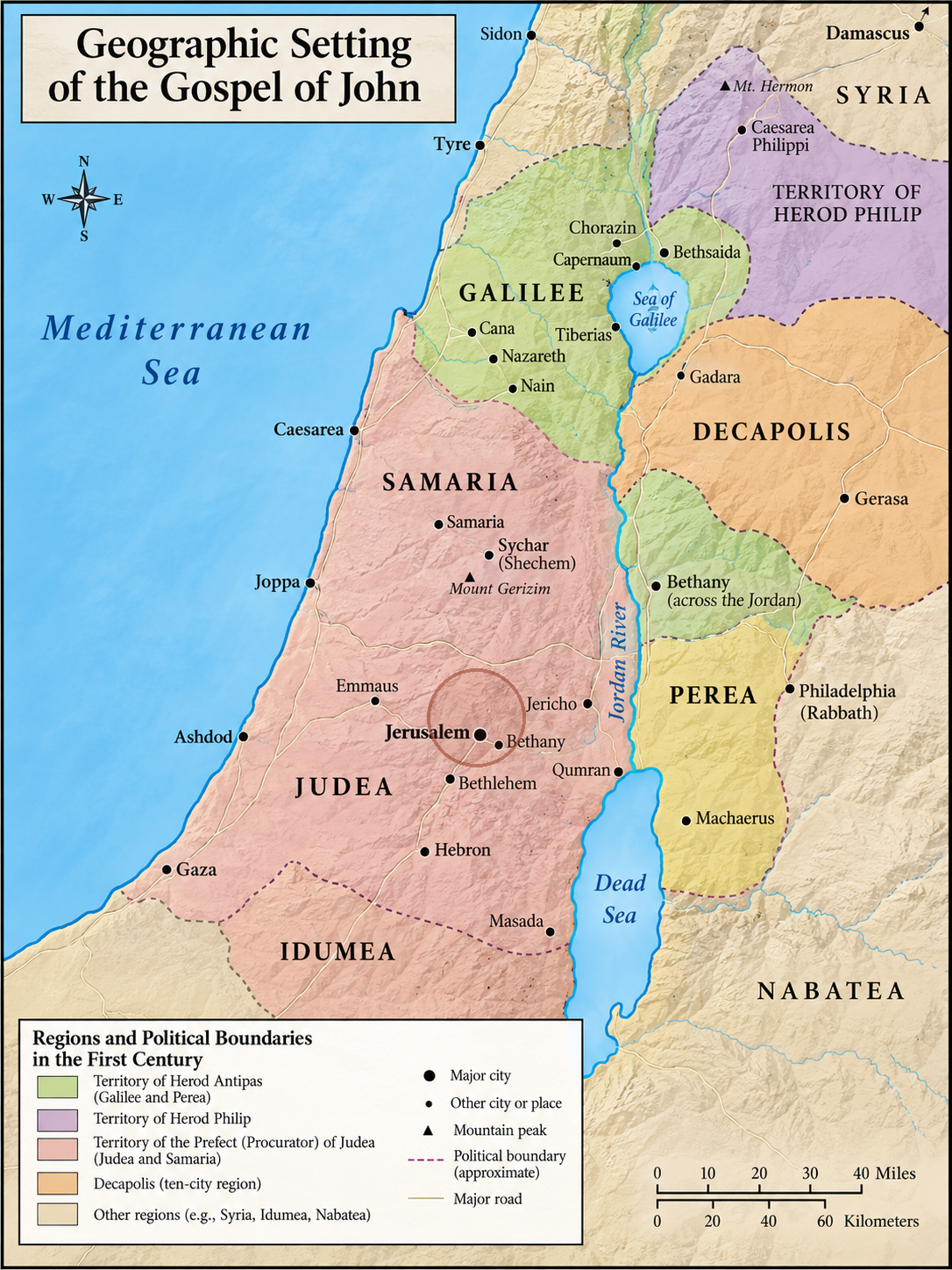
Regional location
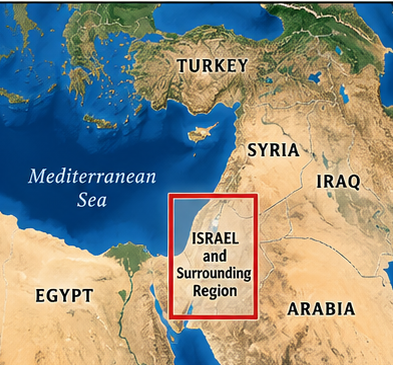
The outlined box locates the wider regional map in today’s geography.
Where does John 14 take place?
Jerusalem vicinity: The chapter continues Jesus’ farewell teaching shortly before His arrest and crucifixion.
Supper-room location: John 14 gives no confirmed room or street; the traditional Upper Room identification is later.
Gethsemane and Golgotha: These landmarks are relevant to the approaching events in John 18–19, not proof of a precise John 14 route.
Father’s house (14:2): The promised heavenly dwelling is not a terrestrial point on this map.
Map legend: Pastel shading indicates ancient regions, relief shows hills and valleys, and blue marks water.
Jerusalem: shared biblical landmark reference
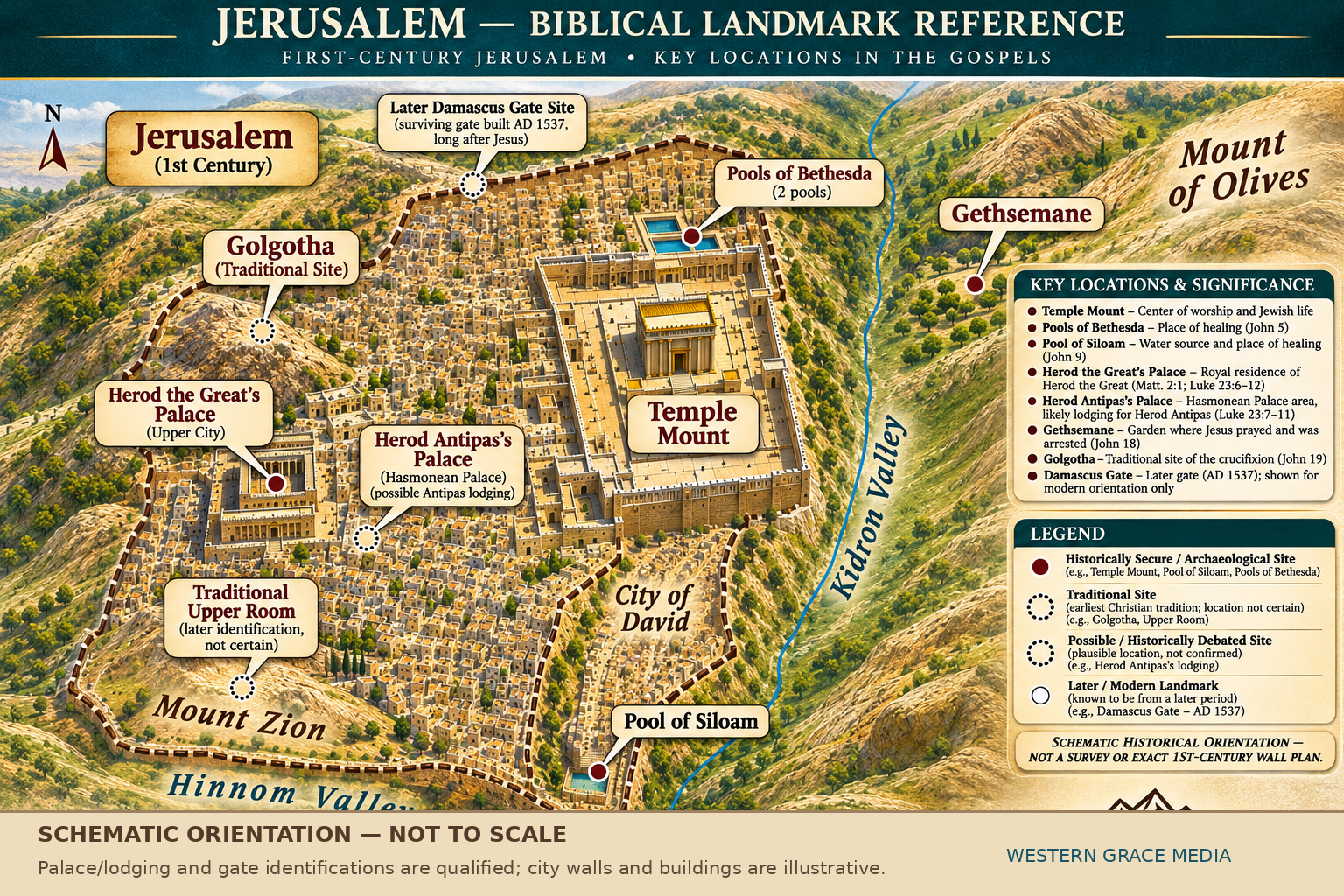
Original WGM orientation illustration. Traditional and uncertain locations are labeled; neither the room nor a precise route is identified by John 14.
Quick Study
Jesus said to him, “I am the way, the truth, and the life. No one comes to the Father, except through me. John 14:6, WEB
Jesus comforts His disciples, promises lasting fellowship with the Father, declares that He is the only way to God, and promises the Spirit of truth. He connects love with keeping His commands and gives a peace not based on circumstances.
The Chapter’s Major Movements
Trust the Lord Jesus (14:1–4)
A troubled heart is invited to trust His promise of lasting fellowship.
The Only Way to the Father (14:5–7)
Jesus is the way, truth, and life, not merely one teacher among many.
The Son Reveals the Father (14:8–11)
His words and works show His complete unity with the Father.
Greater Works and Prayer (14:12–14)
Believers serve in His mission and pray for the Father’s glory.
Love and the Helper (14:15–17)
Love produces obedience, and Jesus promises the Spirit of truth.
I Will Not Leave You (14:18–21)
The living Christ assures His people of fellowship and life.
Our Home with God (14:22–26)
The Father and Son dwell with those who love Christ; the Spirit teaches.
My Peace I Give to You (14:27–31)
Jesus prepares His people for suffering and obeys the Father in love.
Quick Study Flow
Historical and Interpretive Notes
Jerusalem setting: Jesus continues His farewell words after John 13; the exact supper room is not named.
The Father’s house: The promise concerns life with God, not an earthly landmark or mansion floor plan.
The way, the truth, and the life: Jesus alone brings us to the Father (14:6). This saving claim should be expressed with humility.
Greater works: The church’s mission expands after Jesus returns to the Father; the promise is not a competitive miracle contest.
Prayer in Jesus’ name: Requests are made under His authority and for the Father’s glory.
The Counselor: The Holy Spirit teaches, remains with Christ’s people, and reminds the apostles of Jesus’ words.
Peace: Jesus promises His own peace amid impending suffering, not immunity from trials.
Textual detail: The WEB includes a footnote for the Greek title paraklētos in 14:16. The complete chapter is quoted without footnote symbols; the meaning is explained in Translation Word Notes.
Important Bible Words
| Word / Phrase | Simple Meaning | Why It Matters |
|---|---|---|
| Father’s house | The Father’s dwelling and welcome | Jesus promises believers lasting life with Him. |
| The way | Jesus alone brings sinners to the Father | Salvation is received through the Son. |
| Truth | God’s reality faithfully revealed in Jesus | His words can be trusted. |
| Life | Life sourced in Christ | Eternal life is tied to the risen Lord. |
| Greater works | Service following Jesus’ return to the Father | The gospel mission expands through His people. |
| In my name | According to Jesus’ person and mission | Prayer is not a magic formula. |
| Counselor / Helper | The Holy Spirit promised by Jesus | God’s personal presence abides with believers. |
| Orphans | People left without parental care | Jesus promises not to abandon His disciples. |
| Obedience | Following Jesus’ commands | A genuine response of love, not earned salvation. |
| Peace | Christ’s gift amid uncertainty | Not dependent on easy circumstances. |
Translation Word Notes
Capitalized syllables show approximate classroom-style Biblical Greek stress. All full Scripture quotations remain WEB; the NKJV, NIV, and NLT columns offer short translation comparisons, not complete quotations.
| Verse | Greek / Pronunciation | NKJV | NIV | NLT | Meaning |
|---|---|---|---|---|---|
| 14:2 | monēmoh-NAY | mansions | rooms | more than enough room | Dwelling or abiding place; not a promise of luxurious architecture. |
| 14:6 | hodoshoh-DOS | way | way | way | Jesus is the access to the Father. |
| 14:6 | alētheiaah-LAY-thay-ah | truth | truth | truth | Reliability and divine reality disclosed in Christ. |
| 14:6 | zōēzoh-AY | life | life | life | The life that comes through the Son. |
| 14:12 | meizonaMY-zoh-nah | greater | even greater | even greater | Greater works in the context of Jesus’ going to the Father. |
| 14:13 | onomaOH-noh-mah | name | name | name | His authority, character, and mission. |
| 14:16 | paraklētospah-RAH-klay-tos | Helper | Advocate | Advocate | One called alongside to help, counsel, or advocate. |
| 14:17 | pneumaPNEW-mah | Spirit | Spirit | Spirit | Personal Spirit of truth, not a vague influence. |
| 14:18 | orphanosOR-fah-nos | orphans | orphans | orphans | Those left without parental care; Jesus will not abandon His own. |
| 14:23 | monēmoh-NAY | home | home | home | Father and Son dwell with the believer. |
| 14:26 | didaskōdee-DAHS-koh | teach | teach | teach | The Spirit instructs and reminds the apostles. |
| 14:27 | eirēnēay-RAY-nay | peace | peace | peace | Christ’s peace is distinct from the world’s terms. |
The Gospel Connection
John 14 speaks comfort to disciples facing the shock of Jesus’ departure. Their hope is not in their courage or certainty about tomorrow, but in Jesus Himself. He is the way, the truth, and the life, the only access to the Father (14:6). His saving death and resurrection make fellowship with God possible, and He promises to receive His people to Himself. He does not leave believers as orphans: the Holy Spirit will remain with them, teaching and reminding the apostles of Christ’s words. Love for Jesus becomes visible through obedience, but obedience is the fruit of grace rather than the purchase price of salvation. Because Jesus lives, His people can face troubled circumstances with a peace the world cannot manufacture (14:18–19, 27; 20:31).
Reflection
Am I trusting Jesus, loving Him through obedience, and receiving His peace?
A Short Prayer from John 14
Lord Jesus, You are the way, the truth, and the life. When my heart is troubled, help me trust Your promise and Your goodness. Thank You for preparing a place for Your people and for promising the Holy Spirit. Teach me to love You through obedience and receive Your peace when circumstances are uncertain. In Your name, amen.
One Truth to Carry With You
Jesus is the way to the Father; He will not abandon His people and gives them His Spirit and His peace.
Ready to Go Deeper?
SOAP means Scripture, Observation, Application, Prayer. Read the complete passage before considering the explanation. Scripture remains our final authority.
Read the entire WEB passage in context.
Notice what Jesus reveals about the Father, the Spirit, faith, obedience, and His peace.
Respond personally with faith, obedience, gratitude, repentance, or confidence in Christ.
Pray in response to the truth of the passage, not to imagined details.
Let Not Your Heart Be Troubled
What does this passage show about Jesus, God, people, faith, salvation, or obedience?
Jesus speaks to disciples who have just heard that He is leaving and that Peter will deny Him (John 13:33–38). His command to trust Him is grounded in His trustworthiness, not in their circumstances becoming easy.
The Father’s house offers a secure future with Jesus. “Many homes” emphasizes room and welcome in the Father’s presence; the passage does not describe architectural details of heaven.
Jesus promises both to prepare a place and to receive His own to Himself. Believers can rest in His promise without claiming that these verses alone settle every question about the timing of His return.
What fear about the future do I need to bring under Jesus’ promise and character?
Lord Jesus, when my heart is troubled, strengthen my trust in You and the future You have promised.
The Way, the Truth, and the Life
What does this passage show about Jesus, God, people, faith, salvation, or obedience?
Thomas admits his confusion. Jesus answers not with a route to memorize but with His own person: He is the way, the truth, and the life.
“No one comes to the Father, except through me” is a clear claim about the exclusive saving mediation of Christ. It does not grant permission to treat people of other beliefs with contempt.
To know Jesus is to know the Father whom He perfectly reveals. The passage points us beyond generic spirituality to faith in the Son.
Am I relying on Jesus Himself for access to the Father, or on religious performance?
Father, teach me to cling to Your Son, the only Savior and the perfect revelation of Your truth.
Seeing the Father in the Son
What does this passage show about Jesus, God, people, faith, salvation, or obedience?
Philip asks to see the Father. Jesus replies that seeing Him is seeing the Father, not because the Father and Son are the same person but because the Son perfectly reveals the Father.
Jesus describes their mutual indwelling: the Father is in the Son and the Son in the Father. His words and works come in full unity with the Father.
Faith listens to Jesus’ testimony and considers His works. The text supports the Son’s deity and unity with the Father while preserving their personal distinction.
When I want to know what God is like, will I begin by listening to Jesus in Scripture?
Lord Jesus, open my eyes to the Father’s character as You reveal Him in Your words and works.
Works, Prayer, and the Father’s Glory
What does this passage show about Jesus, God, people, faith, salvation, or obedience?
Jesus promises that believers will do His works and “greater works” because He goes to the Father. In the setting of Acts and the church’s mission, the gospel extends to more people and places; this is not a promise that every believer will perform more spectacular miracles than Jesus.
Praying “in my name” means praying in agreement with Jesus’ identity, purposes, and authority, not attaching a formula to any demand.
The stated aim is the Father’s glory in the Son. The promise cannot responsibly be detached from Jesus’ will, other Scripture on prayer, and His saving mission.
How can my prayers and service make the Father’s glory—not my own success—the aim?
Father, align my requests with Jesus’ name, Your purposes, and the work of making Christ known.
Love and Another Counselor
What does this passage show about Jesus, God, people, faith, salvation, or obedience?
Jesus connects love and obedience. His commandments are the response of those who love Him, not a price paid to earn the Father’s favor.
Jesus promises “another Counselor,” the Spirit of truth, who will remain with His people. The Greek paraklētos may be rendered Helper, Advocate, Counselor, or Comforter, emphasizing His personal ministry.
The Spirit is not merely a positive feeling or impersonal energy. Jesus promises His ongoing presence with believers, in distinction from the world that does not recognize Him.
Where can I obey Jesus today as an expression of love, relying on the Spirit’s help?
Holy Spirit, help me love Christ in practice, understand His truth, and depend on Your faithful presence.
Not Orphans: Life with Christ
What does this passage show about Jesus, God, people, faith, salvation, or obedience?
Jesus assures His disciples that they will not be left as orphans. His resurrection, ongoing presence, and the gift of the Spirit give substance to that promise.
“Because I live, you will live also” ties believers’ future life to the living Christ. Jesus also describes the close fellowship of Father, Son, and those who belong to Him.
Obedience shows love for Christ, while His love and self-disclosure remain gifts of grace. We should not turn this promise into a claim that Christians never feel sorrow or absence.
What difference does Jesus’ living presence make when I feel abandoned or afraid?
Lord Jesus, thank You that You have not left Your people alone. Help me abide in Your love and live by Your life.
The Father and Son Make Their Home
What does this passage show about Jesus, God, people, faith, salvation, or obedience?
Judas (not Iscariot) asks why Jesus will reveal Himself to His disciples rather than to the world. Jesus answers in terms of love, receiving His word, and fellowship with the Father and Son.
The Father’s love and presence are not earned by flawless performance. Jesus describes a real relationship in which love takes shape through keeping His teaching.
The promised Holy Spirit will teach and remind the apostles of Jesus’ words. This helps explain their reliable witness; it is not a license for every modern impression to outrank Scripture.
How can I take Jesus’ words seriously while depending on the Spirit instead of my memory or willpower alone?
Father, make Your word at home in my heart. Holy Spirit, bring Jesus’ truth to mind and guide me in faithful obedience.
The Peace Jesus Gives
What does this passage show about Jesus, God, people, faith, salvation, or obedience?
Jesus promises peace unlike the world’s peace. It does not require the absence of conflict; He speaks it on the threshold of betrayal, suffering, and the cross.
His words “the Father is greater than I” describe the Son’s relation to the Father in His mission and humiliation; they do not erase the divine identity John has already affirmed (1:1; 10:30; 14:9–11).
Jesus anticipates the ruler of this world yet says that ruler has no hold on Him. He obeys the Father freely and moves toward His appointed suffering. “Arise, let’s go from here” does not identify a street or precise departure route.
What would it look like to receive Christ’s peace while walking through an unresolved difficulty?
Jesus, give me Your peace and courage. Help me obey the Father in love even when the path is hard.
Hard Questions
Does “many homes” mean every believer gets a mansion?
The WEB translates “many homes”; the Greek speaks of dwelling places. Jesus stresses a secure place with the Father and His own presence (14:2–3), not floor plans or luxury.
Does John 14:3 describe the second coming, our death, or both?
Christians understand its timing in different ways. The clear promise is that Jesus will receive His people to Himself. Avoid making an uncertain timetable the focus of the comfort He gives.
Is Jesus claiming to be the only way to God?
Yes. John 14:6 expressly says no one comes to the Father except through Him. Christians should confess that truth with humility and treat people of all backgrounds with dignity.
Does seeing Jesus mean Father and Son are the same person?
No. John 14:9–11 affirms the Son’s perfect revelation and unity with the Father while distinguishing the Father who sends and the Son who speaks.
What are the “greater works” of John 14:12?
The church’s Spirit-empowered witness after Jesus’ return to the Father spreads His saving message broadly. The verse does not promise every believer an individual miracle ministry greater in spectacle than Christ’s.
Does praying “in Jesus’ name” guarantee anything I request?
It is not a verbal formula that overrides God’s purposes. Jesus explicitly aims at the Father’s glory (14:13). Read this promise with the wider New Testament teaching on prayer and God’s will.
Who is the “another Counselor” Jesus promises?
Jesus identifies Him as the Spirit of truth and later the Holy Spirit (14:16–17, 26). “Another” indicates personal help continuing Jesus’ ministry, not a substitute human teacher or impersonal force.
Does obedience earn God’s love or salvation?
No. Jesus calls His own to keep His commandments out of love (14:15, 21, 23). Salvation is by God’s grace received through faith; obedience is the fruit of genuine love for Christ.
How can Jesus say He will come to His disciples if He is leaving?
The chapter connects His life after death, His continuing presence, and the coming Holy Spirit. Jesus does not give a minute-by-minute sequence, but assures them they will not be abandoned.
Did the Holy Spirit promise new teaching that can overrule Scripture?
John 14:26 particularly promises Jesus’ first disciples that the Spirit will teach and remind them of His words. Claims of new revelation should be tested by the apostolic testimony, not placed above it.
Does “the Father is greater than I” mean Jesus is not fully God?
John’s Gospel affirms the Word was God (1:1) and the Son’s unity with the Father (14:9–11). Evangelicals understand 14:28 in relation to Jesus’ incarnate mission and the Father’s sending authority, not as denial of His deity.
Where exactly was Jesus when He spoke John 14:1–31?
John 14 continues the farewell teaching after the supper of John 13, but no exact room or modern address is given. The Jerusalem map is orientation only; the traditional Upper Room is not a verified pinpoint.
Which worry do I need to bring to Jesus rather than carry alone?
How does Jesus being the only way to the Father shape my faith and witness?
What obedience to Jesus would express love in my daily life?
What does receiving the Holy Spirit’s help and Jesus’ peace look like in my current season?
A Prayer for Faith, Love, and Peace
Father, thank You for sending Your Son to show us Your heart and bring us home. Lord Jesus, You are the only way to the Father and the source of eternal life. Forgive me when I trust my plans, performance, or fears more than Your promises. Holy Spirit, Counselor and Spirit of truth, remind me of the words of Christ and help me obey them. Give me wisdom to pray for the Father’s glory, courage to speak the truth with love, and peace that remains steady when my circumstances change. Keep my eyes on Your goodness and on the day when I will be with You. In Jesus’ name, amen.
Jesus is the way to the Father; He will not abandon His people and gives them His Spirit and His peace.