John 15
The True Vine and Lasting Fruit
Remain in Christ, bear fruit, love one another, and testify faithfully by the Spirit.
Scripture quotations: World English Bible Classic (WEB)

John 15 — Geographic Setting
John 15 continues Jesus’ farewell discourse in the Jerusalem setting before His arrest, but does not name a new place or vineyard. The maps are for historical orientation, not an exact room, street, or route.
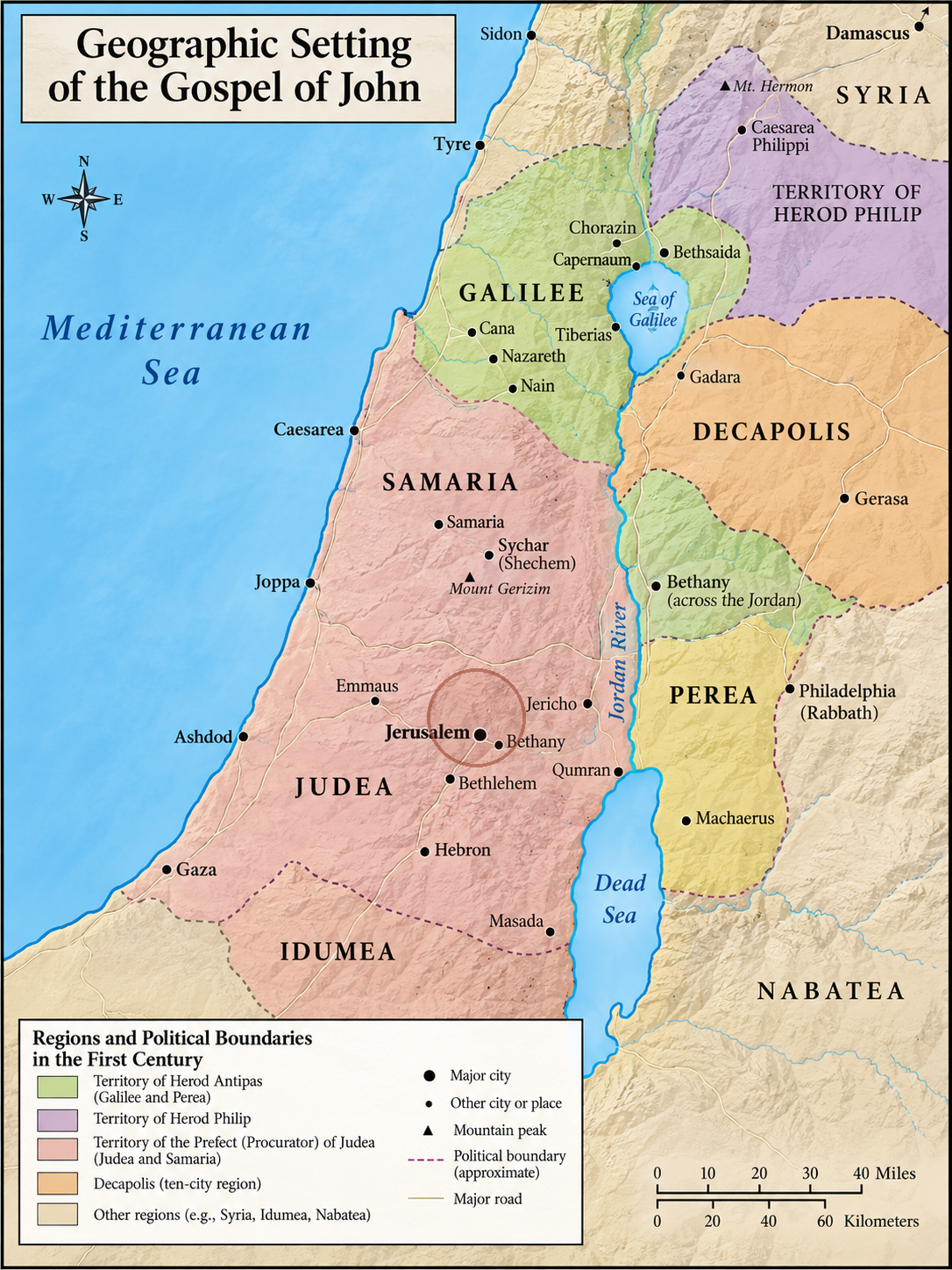
Regional location
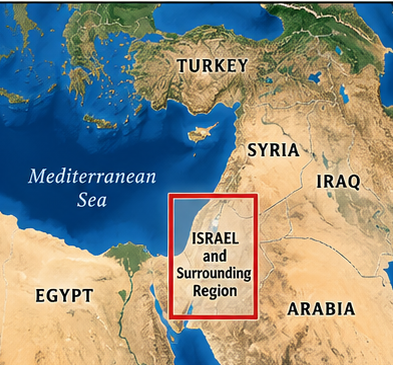
The outlined box locates the wider regional map.
How does this map relate to John 15?
Jerusalem vicinity: The farewell teaching continues after John 13–14 in the final Passover context.
True vine: Jesus’ vine and branches are an illustration of living dependence, not a named vineyard to locate.
Location unknown: No exact supper room, path, or hillside is identified in John 15.
Gethsemane and Golgotha: These landmarks orient readers to the approaching events in John 18–19.
Map symbols: Shaded political regions, relief hills, waterways, and modern locator follow our WGM atlas standard.
Jerusalem: shared biblical landmark reference

Original WGM geographical illustration. Some landmarks are traditional or uncertain; no exact John 15 teaching location is asserted.
Quick Study
I am the vine. You are the branches. He who remains in me and I in him bears much fruit, for apart from me you can do nothing. John 15:5, WEB
Jesus is the true vine and His Father tends the branches. Disciples are to remain in Him, receive His words, pray for the Father’s glory, and bear lasting fruit. Love and joyful obedience reflect Jesus’ sacrificial love; the promised Spirit gives faithful testimony when the world opposes Christ.
The Chapter’s Major Movements
The True Vine (15:1–3)
The Father tends branches; the Son is the source of life and fruit.
Remain in Christ (15:4–6)
Disciples cannot produce spiritual fruit apart from Jesus.
Prayer and Fruit (15:7–8)
His words shape our prayers; fruit glorifies the Father.
Love and Joy (15:9–11)
Obedience flows from love and leads into Christ’s joy.
Love as Jesus Loved (15:12–15)
He lays down His life and calls His followers friends.
Appointed for Lasting Fruit (15:16–17)
Christ calls His people to enduring service and love.
Hatred and Faithful Witness (15:18–21)
His disciples may suffer opposition because they belong to Him.
The Spirit Testifies (15:22–27)
Rejection is serious; the Counselor and disciples bear witness to Christ.
Quick Study Flow
Historical and Interpretive Notes
Geography: This farewell teaching follows John 13–14 but John 15 names no exact room or vineyard.
Vine symbolism: Jesus’ words evoke biblical images of God’s vineyard and people (Isaiah 5; Psalm 80).
Pruning: The Father’s care promotes fruitfulness; not every hardship can be confidently identified as a specific act of pruning.
Abiding: Remaining in Christ includes trusting Him and living by His word rather than relying on independent effort.
Fruit and prayer: Fruit honors the Father; Jesus’ words shape the desires His people bring to Him.
Friendship and command: Jesus’ love is costly, and His friendship does not abolish His lordship.
Opposition: The “world” signifies resistance to Christ, not a racial or national group.
The Spirit: The Counselor testifies about Jesus and strengthens the first disciples’ eyewitness testimony (15:26–27).
Important Bible Words
| Word / Phrase | Simple Meaning | Why It Matters |
|---|---|---|
| True vine | Jesus as the true source of life | Israel’s vine imagery finds its faithful fulfillment in Him. |
| Branches | People represented as joined to the vine | Fruit depends on living connection to Christ. |
| Pruning | Care that promotes healthier fruit | The Father works for spiritual growth. |
| Remain / abide | Continue in living fellowship with Jesus | Repeated command at the center of the chapter. |
| Fruit | Visible results of spiritual life | Character, obedience, love, and witness glorify God. |
| Love | Christlike care and sacrificial action | Jesus supplies both the model and command. |
| Friends | Disciples receiving the Lord’s purposes | Intimacy with Jesus never cancels obedience. |
| World | Human life organized in opposition to God | Not a label for a particular ethnicity or everyone outside the church. |
| Counselor / Helper | The promised Holy Spirit | He bears witness to Christ and sustains faithful testimony. |
Translation Word Notes
Capitalized syllables show approximate classroom-style Biblical Greek stress. All full Scripture quotations remain WEB; the NKJV, NIV, and NLT columns offer short translation comparisons, not complete quotations.
| Verse | Greek / Pronunciation | NKJV | NIV | NLT | Meaning |
|---|---|---|---|---|---|
| 15:1 | ampelosahm-PEH-los | vine | vine | grapevine | Christ is the source of life and fruitfulness. |
| 15:1 | geōrgosgeh-or-GOS | vinedresser | gardener | gardener | The Father tends and cares for the vine. |
| 15:2 | klēmaKLAY-mah | branch | branch | branch | A dependent shoot connected to the vine. |
| 15:2 | kathairōkah-THAI-roh | prunes | prunes | prunes | Cleans or prunes for increased fruitfulness. |
| 15:4 | menōMEH-noh | abide | remain | remain | Continue to dwell in faithful dependence. |
| 15:5 | karposKAR-pos | fruit | fruit | fruit | Outcome of Christ’s life in His people. |
| 15:7 | rhēmaRAY-mah | words | words | words | Jesus’ teaching shaping faithful prayer. |
| 15:9 | agapēah-GAH-pay | love | love | love | Self-giving care rooted in Christ’s love. |
| 15:11 | charakhah-RAH | joy | joy | joy | Christ’s joy shared with His disciples. |
| 15:14 | philosFEE-los | friends | friends | friends | Closeness with Christ in faithful discipleship. |
| 15:16 | eklegomaiehk-LEH-goh-my | chose | chose | chose | Jesus’ initiating call to His disciples. |
| 15:26 | paraklētospah-RAH-klay-tos | Helper | Advocate | Advocate | The Holy Spirit who testifies about Christ. |
The Gospel Connection
John 15 is not a self-improvement plan. The true vine is Jesus Christ, the Son who gives His life for His friends (15:13). Fallen people cannot create spiritual life by determination or religious achievement. We are called to receive and remain in the Savior, trusting His sacrifice and resurrection. His word shapes us; His love moves us toward obedience; and the Father cultivates fruit that glorifies Him. Though the world may resist Christ, believers are not abandoned: the Spirit of truth testifies about Jesus and strengthens the witness of His people. Our confidence is in the living Lord, not our independent strength (15:5; 20:31).
Reflection
Am I remaining in Jesus, loving His people, and depending on the Spirit for faithful witness?
A Short Prayer from John 15
Lord Jesus, You are the true vine and the source of my life. Forgive me for trying to produce spiritual fruit apart from You. Teach me to remain in Your word and love. Shape my prayers, give me joy in obedience, and help me love others as You have loved me. Strengthen my witness by Your Spirit. In Your name, amen.
One Truth to Carry With You
Apart from Jesus I can do nothing; remaining in His love produces lasting fruit and faithful witness.
Ready to Go Deeper?
SOAP means Scripture, Observation, Application, Prayer. Read the complete passage before considering the explanation. Scripture remains our final authority.
Read the entire WEB passage in context.
Notice what Jesus reveals about the Father, abiding, love, fruit, and the Spirit’s witness.
Respond personally with faith, obedience, gratitude, repentance, or confidence in Christ.
Pray in response to the truth of the passage, not to imagined details.
The True Vine and the Father’s Care
What does this passage show about Jesus, God, people, faith, salvation, or obedience?
Jesus identifies Himself as the true vine and the Father as the farmer. In Israel’s Scriptures, a vine could symbolize God’s people (Isaiah 5:1–7; Psalm 80:8–16). Jesus now presents Himself as the faithful source of life and fruitfulness for His disciples.
The Father removes fruitless branches and prunes fruitful ones. The Greek verbs for taking away and pruning invite careful study, but the central point is unmistakable: connection with Jesus must be more than an outward appearance, and the Father tends the vine for fruit.
Jesus says His disciples are already clean because of His word. The cleansing language recalls His earlier teaching about washing (John 13:10); it is not an invitation to earn cleansing through performance.
When I think about God’s pruning, do I see the Father’s care for growth, or only difficulty?
Father, thank You that You tend Your people wisely. Keep me rooted in Jesus and teach me to receive Your correction humbly.
Remain in Me
What does this passage show about Jesus, God, people, faith, salvation, or obedience?
A branch cannot produce fruit independently from the vine. Jesus commands His disciples to remain in Him; this describes ongoing dependence, faith, and fellowship rather than self-generated spiritual achievement.
Fruit comes from Christ’s life at work in His people. Good works, holy character, love, and witness arise from abiding in Him; the chapter does not teach that outward activity can replace a living relationship with the Savior.
The withered-branch and fire imagery is a serious warning, not a small issue to explain away. Evangelical Christians differ about its implications for the perseverance of believers, but both the warning and the call to remain must be taken seriously.
What am I attempting apart from Christ that needs to become a matter of prayerful dependence?
Lord Jesus, keep my heart near You. Expose empty religious activity and produce in me the fruit of genuine faith.
Fruit, Prayer, and the Father’s Glory
What does this passage show about Jesus, God, people, faith, salvation, or obedience?
Remaining in Jesus includes having His words remain in us. Prayer is shaped by His teaching and purposes, not reduced to claiming any outcome we desire.
Jesus connects fruitful discipleship to the glory of the Father. He does not point His followers toward visible success for its own sake, but toward a life that honors God.
The command to remain and the promise of answered prayer belong together: listening to Christ forms the desires we bring before the Father.
How can I allow Jesus’ words to shape the requests I bring to God this week?
Father, shape my desires by Jesus’ word. Make my life fruitful so that the glory belongs to You.
Remain in My Love and Joy
What does this passage show about Jesus, God, people, faith, salvation, or obedience?
Jesus compares His love for His disciples with the Father’s love for Him. The source of Christian love is not our emotional steadiness, but the love revealed by the Son.
Remaining in Christ’s love is connected with keeping His commands, just as Jesus obeys His Father. Obedience is the expression of genuine love, not the purchase price of acceptance before God.
Jesus teaches for the sake of full joy. His promised joy does not erase grief or persecution; He speaks these words while approaching the cross.
What command of Jesus would I obey today as an expression of love rather than mere duty?
Jesus, thank You for loving me. Teach me joyful obedience that grows from Your grace and not from fear.
Love One Another as I Have Loved You
What does this passage show about Jesus, God, people, faith, salvation, or obedience?
Jesus defines the pattern for love: His own costly, self-giving love. He will soon lay down His life, making verse 13 more than an inspiring motto.
Jesus calls His disciples friends and makes the Father’s purposes known to them. Friendship here does not cancel Jesus’ lordship; the same Lord commands His followers to obey Him.
Love for one another is not just affectionate speech. It takes form in truthful service, sacrifice, forgiveness, and the well-being of other believers.
What concrete act of costly, Christlike love can I offer someone this week?
Lord Jesus, thank You for laying down Your life. Teach me to love my brothers and sisters with action and truth.
Chosen and Appointed to Bear Lasting Fruit
What does this passage show about Jesus, God, people, faith, salvation, or obedience?
Jesus reminds His first disciples that He took the initiative in choosing and appointing them. In its immediate setting this speaks to those He sends as witnesses, not to human boasting.
The appointed outcome is fruit that remains. The emphasis is faithful service rooted in relationship with Christ, not impressive statistics or a self-made reputation.
Jesus repeats the command to love one another. Fruitful ministry and genuine love cannot be separated from the One who sends His disciples.
How can I serve where Jesus has placed me without making recognition or results my identity?
Father, thank You that Christ calls His people to fruitful service. Keep love at the center of all I do.
When the World Hates His Disciples
What does this passage show about Jesus, God, people, faith, salvation, or obedience?
Jesus warns that some will oppose His followers because they first rejected Him. “World” here describes humanity in rebellion against God; it must not be turned into blanket hostility toward a nation, ethnicity, or everyone outside the church.
Being chosen out of the world changes a disciple’s allegiance. It does not authorize pride, cruelty, or withdrawal from loving those who disagree.
The servant is not greater than the master. Some will reject the message, but Jesus also says others will keep the disciples’ word. The church’s task is faithful witness, not controlling every response.
When I meet disagreement or rejection, how can I answer with courage, patience, and love?
Lord Jesus, strengthen me to remain faithful when I am misunderstood. Help me honor You without hatred or fear.
Rejecting the Son, and the Spirit’s Witness
What does this passage show about Jesus, God, people, faith, salvation, or obedience?
Jesus’ words and extraordinary works increase the responsibility of those who have directly encountered Him. He is not teaching that people otherwise have no sin; He is exposing the culpability of rejecting the revelation they have received.
The quotation “They hated me without a cause” places opposition to Jesus in the story of Scripture. The words must not be used to assign collective guilt to Jewish people; Jesus, His disciples, and the earliest church were Jewish.
Jesus promises the Counselor, the Spirit of truth, who will testify about Him. The first disciples will also testify because they were with Jesus from the beginning. This grounds Christian witness in the Holy Spirit and the apostles’ direct testimony, now preserved in Scripture.
How can I speak truthfully about Jesus while depending on the Holy Spirit rather than my own persuasion?
Holy Spirit, bear witness to Christ and help me speak His truth faithfully, courageously, and lovingly.
Hard Questions
What does Jesus mean by “the true vine”?
Vine imagery recalls God’s care for Israel (Isaiah 5; Psalm 80). Jesus presents Himself as the faithful, life-giving vine. Fruit comes through Him, not through ancestry, outward religion, or independent effort.
Does pruning mean every hardship is God punishing me?
No. Jesus says the Father prunes for fruitfulness, but we should not label every injury, illness, or tragedy as a specific divine punishment. The wider Bible calls believers to trust God’s wise care and seek His help in suffering.
What does “remain in me” mean practically?
Continuing trust in Jesus, receiving His word, prayerful dependence, obedience, and life among His people. These are expressions of fellowship with Christ, not techniques for earning salvation.
Do fruitless branches prove a true believer can lose salvation?
Evangelicals differ: some see a warning about those merely outwardly attached; others emphasize a real warning against apostasy. Both must take Jesus’ command to remain and His warning seriously. The chapter is not permission for shallow assurance or hopeless fear.
What kind of fruit should disciples bear?
John 15 highlights love, obedience, prayer aligned with Christ’s words, and faithful testimony. Elsewhere Scripture speaks of the fruit of the Spirit (Galatians 5:22–23). Fruit is more than measurable activity.
Does John 15:7 promise anything I ask for?
Jesus joins answered prayer to remaining in Him and His words remaining in us. Faithful prayer is shaped by Christ’s will and the Father’s glory, not by treating the verse as a blank check.
Is obedience how we earn Christ’s love?
No. Jesus first says He has loved His disciples (15:9). His command is to remain in that love, with obedience as its expression. Salvation rests on grace, not the perfection of our effort.
Is the love of friends more important than love of enemies?
Jesus gives a special command for His disciples to love one another, while elsewhere teaching love for enemies (Matthew 5:44). The commands reinforce, rather than cancel, each other.
Does “you didn’t choose me” settle every debate about election?
It clearly teaches Jesus’ initiative in choosing and appointing the disciples addressed. Christians hold different views about how this relates to individual salvation. The immediate application emphasizes humble, fruitful service.
Does opposition mean we are always being faithful?
No. Jesus predicts hatred for His name, but some negative reactions come from our own lack of wisdom or kindness. We should examine ourselves and continue speaking the truth in love (1 Peter 3:15–16).
Who is the “world” Jesus describes?
In this setting the world is people opposed to Christ’s revelation. The term is not a racial, national, or ethnic category; it does not justify hostility toward outsiders. God loved the world and sent His Son (John 3:16).
What is the Holy Spirit’s testimony?
Jesus promises the Counselor, the Spirit of truth, who will testify about Him; the first apostles also testify as eyewitnesses. The Spirit never directs us to replace Jesus with an unrelated message.
Where am I trying to produce spiritual fruit through my own strength rather than remaining in Jesus?
What loving act toward another believer would reflect Christ’s self-giving love?
How can Jesus’ words reshape my prayers and priorities this week?
How will I respond in truth and love when faith in Christ is misunderstood?
A Prayer for Abiding, Love, and Witness
Father, thank You for sending the true Vine, Your Son Jesus Christ. I confess that I cannot create spiritual life or lasting fruit by my own effort. Forgive my pride, impatience, and lovelessness. Help me remain in Christ through His word and daily dependence. When You prune my life, give me humility and wisdom. Teach me to obey from love, pray for Your glory, and care sacrificially for Your people. When I face opposition, keep me truthful and gentle. Holy Spirit, testify of Jesus through my words and actions. May all the fruit of my life point others to the Savior. In Jesus’ name, amen.
Apart from Jesus I can do nothing; remaining in His love produces lasting fruit and faithful witness.